⸺ On this page
1. Why this matters
2. The three kinds of special needs trust
3. Third-party vs first-party at a glance
4. What the trust can pay for
5. ABLE accounts
6. Choosing a trustee
7. Mistakes we see
8. Frequently asked questions
Why this matters
Supplemental Security Income and Medicaid are means-tested. To qualify, a person’s countable resources must stay under a limit that has not moved in more than three decades.
| 2026 figure | Amount | Note |
| SSI resource limit, individual | $2,000 | Unchanged since 1989 |
| SSI resource limit, couple | $3,000 | Unchanged since 1989 |
| ABLE annual contribution limit | $20,000 | Indexed; tied to the gift tax exclusion plus certain earnings |
| Federal estate tax exclusion | $15,000,000 | Per person, 2026; not a constraint for most families |
Now picture a parent who leaves a $60,000 inheritance to a son with an intellectual disability. The month that money arrives, he is over the resource limit. SSI stops. The Medicaid that pays for his day program and his medications may stop with it. He spends the $60,000 on the things Medicaid was covering, and when it runs out he reapplies — often with a gap in coverage and a waiting list to get back onto services that took years to arrange.
The same $60,000, in a properly drafted third-party special needs trust: it is not his resource. Benefits continue uninterrupted. The trustee uses the money for the things benefits don’t cover — therapies, a better wheelchair, a laptop, a trip to see his sister — for as long as it lasts. And whatever remains at his death goes to whoever you named, with no payback to the state.
The three kinds of special needs trust
1. Third-party special needs trust
Funded with someone else’s money — yours, a grandparent’s, an aunt’s. This is the one most parents need. It can be created inside your will (testamentary) or as a standalone trust that relatives can contribute to now and name as a beneficiary on their own policies and accounts.
- No Medicaid payback. Whatever remains at your loved one’s death passes to the remainder beneficiaries you name — siblings, a charity, whoever you choose.
- Can be funded during your lifetime or at your death.
- Everyone in the extended family can direct gifts and beneficiary designations to it.
2. First-party (self-settled) special needs trust — the “d4A” trust
Funded with the beneficiary’s own money: a personal injury settlement, back-due Social Security, an inheritance that arrived outright, or a divorce award. Authorized by 42 U.S.C. § 1396p(d)(4)(A).
- The beneficiary must be under age 65 when the trust is established and funded.
- The beneficiary must be disabled as defined by Social Security.
- The trust must include a Medicaid payback provision: at the beneficiary’s death, the state is reimbursed for medical assistance paid, up to the amount remaining.
- Since the Special Needs Trust Fairness Act of 2016, a beneficiary with capacity may establish their own; before that only a parent, grandparent, guardian, or court could.
3. Pooled trust — the “d4C” trust
Authorized by 42 U.S.C. § 1396p(d)(4)(C) and managed by a nonprofit association, which pools assets for investment while keeping a separate sub-account for each beneficiary. Useful for smaller amounts, for beneficiaries over 65 in some circumstances, and where no suitable individual trustee exists. Retained amounts and payback terms vary by organization, so the specific program matters.
Third-party vs first-party at a glance
| Third-party SNT | First-party SNT (d4A) | |
| Whose money funds it | Parents, grandparents, others | The beneficiary’s own |
| Medicaid payback at death | None | Required |
| Age limit to create | None | Under 65 |
| Who gets what’s left | Whoever you name | State first, then remainder |
| Can be in your will | Yes | No |
| Relatives can contribute | Yes | No |
| Typical trigger | Estate planning for a child | Injury settlement or inheritance received |
The order matters enormously. If you plan ahead, your money goes into a third-party trust with no payback. If you leave it outright and the family scrambles afterward, the same money now belongs to the beneficiary — and the only fix is a first-party trust with a Medicaid payback. Identical dollars, very different outcome, decided entirely by whether the planning happened first.
What the trust can pay for
The guiding principle is supplement, don’t replace. The trust pays for what benefits do not cover.
- Therapies, equipment, and medical care not covered by Medicaid
- Education, tutoring, job coaching, and vocational training
- A computer, tablet, cell phone, and internet service
- Travel, recreation, hobbies, and a companion’s costs to travel along
- A vehicle and its insurance, maintenance, and modifications
- Personal care attendants beyond what Medicaid authorizes
- Furniture, clothing, haircuts, and personal items
- Funeral and burial arrangements
Two hard rules for the trustee. Never distribute cash directly to the beneficiary — pay vendors and providers instead. And be deliberate about food and shelter: distributions for those categories are treated as in-kind support and maintenance and can reduce the SSI payment. Sometimes that trade is worth it. It should always be a decision, not an accident.
ABLE accounts
An ABLE account is a tax-advantaged savings account for a person whose disability began before a qualifying age. For 2026 the annual contribution limit is $20,000. Earnings grow tax-free and qualified disability expenses come out tax-free.
Where ABLE is better
- Small amounts and everyday spending.
- The beneficiary can control the account themselves — genuinely meaningful for someone who wants independence.
- Cheap and fast to open. No drafting, no trustee.
- Unlike a trust, ABLE funds can be used for food and shelter without the in-kind support reduction.
Where a trust is better
- Larger inheritances — ABLE contributions are capped annually and balances above a threshold begin to affect SSI.
- No Medicaid payback in a third-party trust; most ABLE accounts carry one.
- Professional management and oversight when the beneficiary cannot manage money.
- Terms that can direct where the remainder goes.
Most families should use both. The ABLE account handles monthly spending and gives the beneficiary autonomy. The third-party trust holds the inheritance and the long horizon. They complement each other well, and the trustee can fund the ABLE account from the trust.
Choosing a trustee
01
Longevity
This trust may need to run for forty or fifty years. Name successors, and successors to the successors.
02
Benefits fluency
A trustee who does not understand SSI rules can end benefits with one well-intentioned check. Consider a professional co-trustee.
03
Willingness to say no
The trustee will field requests from the beneficiary and from relatives. The job requires a spine as much as a spreadsheet.
A common structure that works well: a family member who knows the beneficiary serves alongside a corporate or professional co-trustee who handles compliance and investments. Another is a pooled trust, where a nonprofit provides the administration and the family stays involved in decisions.
Mistakes we see
- Leaving the inheritance outright because “it’s not that much.” Against a $2,000 resource limit, almost anything is that much.
- Leaving it to a sibling to manage informally. That money is legally the sibling’s — exposed to their divorce, creditors, and death, with no enforceable duty to the person it was meant for.
- Forgetting the beneficiary designations. A life insurance policy or retirement account still naming your child directly overrides everything the will and trust say. These forms have to be changed to name the trust.
- Not telling the family. A grandparent who leaves $10,000 to your child directly can undo the entire plan. Tell relatives the trust exists and how to direct gifts to it.
- Naming the trust as beneficiary of an IRA without analysis. Retirement accounts payable to trusts carry their own rules, and getting it wrong is expensive. This needs specific drafting.
- Using an out-of-state form. Special needs drafting sits at the intersection of federal benefits law and Texas trust law. Generic documents fail on both sides.
- Waiting. The third-party trust with no payback is available while you are planning. After a settlement lands or an inheritance is received, the only option left carries a Medicaid payback.
Most families should use both. The ABLE account handles monthly spending and gives the beneficiary autonomy. The third-party trust holds the inheritance and the long horizon. They complement each other well, and the trustee can fund the ABLE account from the trust.
Frequently asked questions
What happens if I just leave money to my disabled child in my will?
You likely disqualify them. SSI has a resource limit of $2,000 for an individual and $3,000 for a couple in 2026 — a figure that has not changed since 1989. An outright inheritance of any meaningful size pushes them over that limit, ends their SSI, and in most states ends the Medicaid that comes with it. They then spend the inheritance down and reapply. A special needs trust avoids that entire cycle.
What is the difference between a first-party and a third-party special needs trust?
The source of the money. A third-party trust is funded with someone else’s assets — typically a parent’s or grandparent’s — and has no Medicaid payback; whatever is left can go to your other children. A first-party or self-settled trust holds the beneficiary’s own money, such as a personal injury settlement or an inheritance they already received outright. Under 42 U.S.C. § 1396p(d)(4)(A) it must be established before the beneficiary turns 65, the beneficiary must be disabled, and it must repay Medicaid from what remains at death.
Can my disabled child's inheritance just go to a sibling to manage informally?
Please don’t. Once that money is in your other child’s name it is legally theirs: exposed to their divorce, their creditors, their bankruptcy, their car accident, and their own death. They have no enforceable duty to spend it on their sibling, and if they do spend it that way it may be treated as a gift affecting benefits. It is a well-meant arrangement that fails regularly, and a third-party special needs trust does the same job with actual legal protection.
What can a special needs trust pay for?
Supplemental things that improve quality of life without replacing what benefits already provide: therapies and equipment not covered by Medicaid, education, a computer, travel, a vehicle, recreation, personal care attendants, cell phone and internet, and a companion’s expenses. Distributions for food and shelter can reduce the SSI payment, so a good trustee coordinates those carefully. Cash should generally never be handed directly to the beneficiary.
What is an ABLE account, and does it replace a special needs trust?
An ABLE account is a tax-advantaged savings account for people whose disability began before a qualifying age. The 2026 annual contribution limit is $20,000. ABLE accounts are simple, cheap, and the beneficiary can control them — genuinely useful for smaller amounts and day-to-day spending. They do not replace a trust: contributions are capped annually, total balances affect SSI above a threshold, and most ABLE accounts carry a state Medicaid payback at death. We frequently use both together.
Who should be the trustee?
Someone who will still be around, understands benefits rules, and can say no. Many families name a trusted relative as trustee with a professional or corporate co-trustee, or use a pooled trust managed by a nonprofit under 42 U.S.C. § 1396p(d)(4)(C). What matters most is continuity — this trust may need to function for fifty years — and naming clear successors.
Can a special needs trust be created inside my will?
Yes, and for many Texas families that is the most cost-effective route. A testamentary third-party special needs trust is drafted inside your will and comes into existence at your death. The trade-off is that it goes through probate, which in Texas is comparatively inexpensive. If you want it funded during your lifetime or want other relatives to be able to contribute now, a standalone trust is the better structure.
What should relatives do if they want to leave something too?
Direct them to the trust, not to the person. A well-meaning grandparent naming your child on a life insurance policy or a savings bond can undo years of planning. Once the third-party trust exists, everyone in the family can name the trust as beneficiary instead. We give clients a short letter to hand to relatives explaining exactly how to do it.
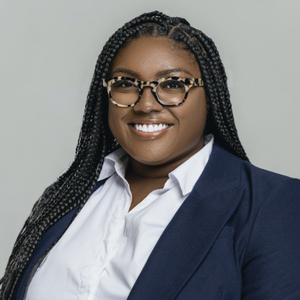
Written and reviewed by Jireh Davis, J.D., MBA
Attorney and mediator at J. Davis Law & Mediation. Licensed in Texas. Practice focused on estate planning, probate, and business law for families and owners across Harris, Fort Bend, Montgomery, Tarrant, and Dallas Counties.
Last reviewed: September 2026 · Citations are to the Texas Estates Code, Texas Property Code, and federal law as noted.
Related pages
Trusts
The broader picture on Texas trusts and what each kind is for.
Estate Planning Overview
How a special needs trust fits into the rest of your plan.
Wills
Where a testamentary special needs trust lives.